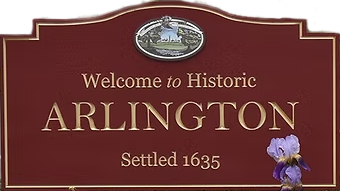
By Michael Armanious and Jared Padgett
(Originally published on LinkedIn. https://www.linkedin.com/pulse/bridging-books-community-arlington-mode-michael-armanious-dba-mba-xlfmc)
What happens when a whole town becomes your classroom?
What Service Learning Is (and Is Not)
Schools are paying more attention to service learning these days, as they look for ways to make classwork feel more real, more engaging, and more connected to students’ communities.
Service learning pairs hands-on community work with classroom learning and time for reflection. Students take what they’re learning in class, use it to tackle a real need, and then think, talk, and write about the experience — which deepens both their academic understanding and their sense of responsibility to others (Hatcher & Bringle, 1997; National and Community Service Act of 1990).
It is worth being clear about what service learning is not:
- A one-off volunteer day
- Just logging hours to meet a graduation requirement
- A bolt-on activity that has nothing to do with what is being taught
- A one-way street that only benefits the students — or only the community
Done well, service learning:
- Ties directly into a course or academic standard
- Responds to a real, ongoing community need
- Has clear goals for what students should learn
- Includes regular reflection, through discussion, journaling, or presentations (Skinner & Chapman, 1999; Furco, 1996)
Compare that to plain community service, which usually is not built into the curriculum, may or may not include reflection, and mainly focuses on benefiting the person receiving the service (Skinner & Chapman, 1999; Furco, 1996).
Service learning sits in between: it treats service and learning as equally important goals, so both the community and the student walk away better off (Furco, 1996; Sigmon, 1994).
Making Classwork Feel Real
When woven into the curriculum and connected to community partners, service learning can turn abstract lessons into something students can see and touch.
Research shows it can:
- Sharpen academic skills and critical thinking (Conrad & Hedin, 1980; Astin, Vogelgesang, Ikeda, & Yee, 2000)
- Make lessons feel more meaningful (Billig, Jesse, & Brodersen, 2008)
- Boost engagement and effort in class (Blyth, Saito, & Berkas, 1997; Melchior & Bailis, 2002)
A four-year study in Philadelphia found that students who completed at least 30 hours of service learning scored higher on tests and showed better classroom habits, such as showing up more consistently (Billig, 2000). Other studies support this, showing that combining service with coursework improves grades, sharpens thinking skills, and helps students tackle harder problems (Astin et al., 2000; Conrad & Hedin, 1980).
When students can see why and what they are learning matters, they tend to skip class less, fail fewer courses, and are less likely to drop out (Melchior & Bailis, 2002; Scales, Roehlkepartain, Neal, Kielsmeier, & Benson, 2006; Yamauchi, Billig, Meyer, & Hofschire, 2006). In short, school starts to feel like more than just the next test.
Building Civic Engagement, Responsibility, and Leadership
Study after study points to the same thing: service learning helps students care more about their communities and their role in them.
Across grade levels, it is linked to:
- A better grasp of community needs and how institutions and government work (Melchior, 1997; Billig, 2000)
- More civic involvement down the road — voting, volunteering, staying engaged (Cress, Burack, Giles, Elkins, & Stevens, 2010; Winston, 2015)
- A stronger sense of duty and fairness (Seilstad, 2014; Yan, 2013)
Because students usually lead the planning and execution of these projects, they build real leadership skills—and see themselves as problem-solvers rather than part of the problem (Astin & Sax, 1998; Melchior & Bailis, 2002; Yamauchi et al., 2006).
Personal and Social Growth
Beyond academics and civics, service learning shapes who students become.
It has been shown to:
- Build empathy and community connection, even among young kids (Scott & Graham, 2015; Everhart, 2016)
- Broaden cultural understanding, cut down on stereotyping, and make students more comfortable with people different from themselves (Eyler & Giles, 1999; Li et al., 2018)
- Build self-worth, a sense of capability, and a clearer sense of identity (Levesque-Bristol, Knapp, & Fisher, 2010; Astin et al., 2000)
- Sharpen communication, teamwork, and conflict-resolution skills (Hebert & Hauf, 2015; Boys, Quiring, Harris, & Hagan, 2015)
Larger studies also link service learning to better behavior overall — less absenteeism, fewer discipline issues — especially for kids who are more at risk (Melchior & Bailis, 2002; Scales et al., 2006; Yamauchi et al., 2006).
Put simply: service learning helps students grow academically and personally, making them more empathetic, resilient, and socially capable.
Exploring Careers and Building Workplace Skills
For many students, service learning is their first real taste of what different careers actually involve.
Research shows it helps students:
- Get a clearer sense of their own interests, strengths, and values — which leads to better-informed career decisions (Coulter-Kern, Coulter-Kern, Schenkel, Walker, & Fogle, 2013; Mitchell & Rost-Banik, 2019)
- Build comfort and interest in working with specific groups, like people with disabilities, through direct experience (Diacin & Vansickle, 2014)
- Look back on service learning as a turning point that shaped their career path and long-term commitment to giving back (Mitchell & Rost-Banik, 2019)
Working in real organizations and community settings also gives students practice with:
- Being reliable and accountable
- Talking with adults, clients, and partners
- Working on a team and leading one
- Solving messy, real-world problems (Eyler & Giles, 1999; Heffner & Beversluis, 2002)
These are exactly the skills employers say they want.
What This Looks Like in Practice: Arlington as a Learning Laboratory
Arlington Public Schools (APS) has built strong partnerships with local nonprofits—including Food Link, Arlington EATS, Neighbors Eating All Together (NEAT), ACMi, and the Council on Aging—giving students meaningful community exposure and service opportunities.
However, the district is poised for a bigger shift. Rather than treating civic engagement as a checklist of volunteer hours, APS could deliberately weave coursework into organizational missions. That kind of intentional integration would turn ad hoc service into measurable, credentialed competencies, embedding community engagement directly into the core curriculum.
When educators co-design classroom units alongside community partners, they build an ecosystem of shared purpose—one in which students address authentic community challenges while developing transferable skills. This approach elevates Arlington from a district with community ties to a living learning laboratory where every partnership becomes a pathway for deeper inquiry, civic identity, and demonstrable impact.
The lesson for other districts is simple: the difference between a volunteer day and a transformative learning experience is intentional design. When service is built into the curriculum—not added on—students carry it with them.
Why This Matters for Schools and Communities
Taken together, the evidence makes a clear case: good service learning isn’t a detour from a school’s mission — it’s one of the best ways to fulfill it.
When schools stop just counting volunteer hours and instead design real, curriculum-connected service learning experiences, they can:
- Make academic work feel more meaningful and more rigorous
- Boost problem-solving ability, engagement, and persistence
- Cut down on absenteeism, course failures, and dropout risk
- Encourage active civic participation, social responsibility, and leadership
- Build empathy, cultural awareness, confidence, resilience, and better behavior
- Help students discover career paths and pick up the skills they need to land a job
The result tends to last: students come away seeing themselves, their communities, and their own potential to contribute differently—now and in the future.
References
Anderson, V., Kinsley, C., Negroni, P., & Price, C. (1991). Community service learning and school improvement in Springfield, Massachusetts. Phi Delta Kappan, 72(10), 761–764.
Astin, A. W., Vogelgesang, L. J., Ikeda, E. K., & Yee, J. A. (2000). How service learning affects students. Higher Education Research Institute, UCLA.
Billig, S. H. (2000). Research on K–12 school-based service-learning: The evidence builds. Phi Delta Kappan, 81(9), 658–664.
Billig, S. H., Jesse, D., & Brodersen, R. (2008). Emerging research on service-learning in K–12 education. In Furco, A., & Billig, S. H. (Eds.), Service-learning: The essence of the pedagogy (pp. 245–261). Information Age Publishing.
Billig, S. H., Jesse, D., & Grimley, M. (2008). Using service-learning to promote character education in a large urban district. Journal of Research in Character Education, 6(1), 21–34.
Blyth, D. A., Saito, R., & Berkas, T. (1997). A quantitative study of the impact of service-learning programs. In A. Waterman (Ed.), Service-learning: Applications from the research (pp. 39–56). Erlbaum.
Boys, S., Quiring, S., Harris, C., & Hagan, C. (2015). Interdisciplinary service learning: Building student competencies through community collaboration. Journal of Legal Studies Education, 32(1), 73–96.
Conrad, D., & Hedin, D. (1980). School-based community service: What we know from research and theory. Phi Delta Kappan, 72(10), 743–749.
Coulter‑Kern, R., Coulter‑Kern, P., Schenkel, R., Walker, T., & Fogle, T. (2013). Service-learning and career development. Michigan Journal of Community Service Learning, 19(2), 53–63.
Cress, C. M., Burack, C., Giles, D. E., Elkins, J., & Stevens, M. (2010). A promising connection: Increasing college access and success through civic engagement. Campus Compact.
Diacin, M., & Vansickle, J. (2014). Students’ perceptions of career opportunities in disability services following service learning. Journal of Applied Sport Management, 6(3), 27–42.
Everhart, R. S. (2016). Service-learning and empathy in psychology students. Journal of Service-Learning in Higher Education, 5, 1–17.
Eyler, J., & Giles, D. E. (1999). Where’s the learning in service-learning? Jossey‑Bass.
Furco, A. (1996). Service-learning: A balanced approach to experiential education. In B. Taylor (Ed.), Expanding boundaries: Serving and learning (pp. 2–6). Corporation for National Service.
Hebert, A., & Hauf, P. (2015). Student learning through service learning. Teaching of Psychology, 42(4), 393–399.
Levesque‑Bristol, C., Knapp, T., & Fisher, B. J. (2010). The effectiveness of service-learning. Teaching of Psychology, 37(4), 307–315.
Li, Y., Yao, X., Song, H., Fu, Q., & Chen, X. (2018). How does service-learning affect social justice attitudes? Teaching in Higher Education, 23(4), 454–469.
Melchior, A., & Bailis, L. (2002). Impact of service-learning on civic attitudes and behaviors of middle and high school youth. Brandeis University.
Mitchell, T. D., & Rost‑Banik, C. (2019). How sustained service-learning experiences inform career pathways. Michigan Journal of Community Service Learning, 25(2), 44–61.
National and Community Service Act of 1990, Pub. L. No. 101‑610, 104 Stat. 3127.
Scott, K., & Graham, J. A. (2015). Service-learning: Implications for empathy and community engagement. Education and Urban Society, 47(6), 603–620.
Scales, P. C., Roehlkepartain, E. C., Neal, M., Kielsmeier, J. C., & Benson, P. L. (2006). Reducing academic achievement gaps: The role of community service and service-learning. Search Institute.
Shalaway, L. (1991). Learning from community service. Instructor, 100(6), 98–100.
Sigmon, R. (1994). Serving to learn, learning to serve. In C. Kinsley (Ed.), Service-learning primer. National Society for Experiential Education.
Skinner, R., & Chapman, C. (1999). Service-learning and community service in K–12 public schools (NCES 1999‑043). U.S. Department of Education.
Winston, P. L. (2015). The long-term impact of service-learning on political participation. Unpublished dissertation.
Yamauchi, L. A., Billig, S. H., Meyer, S., & Hofschire, L. (2006). Student outcomes from service-learning. Educational Horizons, 84(4), 321–331.
Yan, W. (2013). Social justice and social responsibility in service-learning. Journal of College Student Development, 54(4), 359–363.