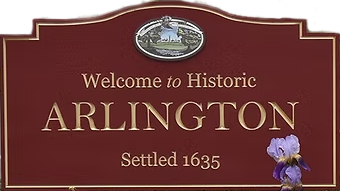
Arlington stands out as a Learning Town because organizations like ACMi serve as a virtual public square—bringing people together, amplifying diverse voices, and enabling the free exchange of ideas. Alongside AHA, APD, COA, Arlington EATS, Food Link, and many others, these groups champion continuous improvement, collaboration, and knowledge sharing. By embracing the disciplines of a learning organization, Arlington fosters an environment where curiosity, growth, and lifelong learning are celebrated. This collective commitment drives innovation, resilience, and lasting benefits for every resident and business. Notable outcomes include:
- Stronger community resilience
- Greater innovation and creativity
- A more skilled and adaptable workforce
- Improved collaboration across organizations
- Better quality of life for residents
- Increased civic engagement and volunteerism
- A stronger local economy
- More equitable access to lifelong learning
- Better services through continuous improvement
- A community that is prepared for future challenges
- More equitable access to lifelong learning
- Better services through continuous improvement
- A community that is prepared for future challenges
The Heart of this Idea: Learning Organizations
How Arlington Gets There — One Organization at a Time
Arlington’s journey toward becoming a Learning Town doesn’t happen by declaration. It happens through action — specifically, by inviting every organization operating in Arlington to adopt a set of disciplines that have already transformed businesses, governments, and institutions worldwide. Those disciplines come from one of the most influential thinkers in organizational leadership of the last century. Together, we can build a resilient and confident community that learns and grows continuously.
Meet the Framework: Peter Senge’s Five Disciplines
MIT Professor. Peter Senge is a senior lecturer of leadership and sustainability at MIT’s Sloan School of Management and the founding chairman of the Society for Organizational Learning. In his landmark 1990 book The Fifth Discipline, Senge defined a learning organization as one that
continually expands its capacity to create the future it desires — by aligning individual growth, team capabilities, shared direction, and systemic understanding.
In plain terms: he figured out why some organizations keep growing no matter what the world throws at them — and why others stagnate. The difference isn’t resources. It’s whether they know how to learn.
The Five Disciplines — Applied to Arlington
1. Systems Thinking — Seeing the Whole Picture
Systems Thinking helps organizations look beyond isolated problems and understand how different parts of the community are connected. In a Learning Town, government, schools, businesses, and nonprofits work together rather than in silos. Arlington EATS is a good example: it recognizes that food insecurity is linked to housing, income, health, transportation, and social connection, so it partners with schools, volunteers, businesses, and community organizations to address the broader system—not just provide food.
Benefit for Arlington: More coordinated solutions, stronger partnerships, and a healthier, more resilient community.
2. Personal Mastery
Every person commits to their own growth
2. Personal Mastery
Personal Mastery is the discipline of continually expanding one’s knowledge, skills, and abilities to better serve others. It is more than professional development—it is a lifelong commitment to learning and excellence. When individuals embrace this mindset, it helps create a culture of lifelong learning throughout the community.
The Arlington Police Department provides a strong example. Both Lt. John Kelley and Officer Bryan White pursued higher education to deepen their expertise and better serve the residents of Arlington. Their commitment to continuous learning demonstrates how personal growth strengthens public service and inspires others to keep learning.
Benefit for Arlington: A workforce and community that continually grows, adapts confidently to change, and provides higher-quality services.
3. Mental Models
Questioning the assumptions we’ve always taken for granted
Mental Models are the deeply ingrained assumptions and beliefs that shape how we see the world and act — and learning organizations surface, test, and improve them. Every organization in Arlington carries invisible assumptions: about who their customers are, how government “has to” work, and what residents will and won’t engage with. Learning organizations ask: what if we’re wrong? That question opens doors.
Arlington benefit: Organizations that innovate rather than repeat the same patterns, and a government that genuinely adapts to residents rather than tradition.
3. Mental Models — Questioning the assumptions
Mental Models are the deeply held assumptions and beliefs that influence how we think, act, and respond to challenges. In a true learning organization, these assumptions are continuously examined and questioned to spark innovation and improvement. The Arlington Housing Authority (AHA) exemplifies this mindset. Instead of seeing affordable housing as just providing apartments, AHA has redefined its mission—offering lifelong learning opportunities, digital literacy, financial education, youth programs, and resident support services that empower individuals and families to flourish. By consistently asking, “How can we better serve our residents?” AHA demonstrates how reshaping mental models leads to lasting, positive change for both individuals and the broader Arlington community.
Benefit for Arlington: Organizations that innovate instead of repeating old patterns, resulting in more responsive services and a community that continually learns and improves.
4. Shared Vision — Everyone is Working Toward the Same Future
A Shared Vision creates a common purpose that inspires commitment rather than compliance. In a Learning Town, organizations build that vision together with employees, volunteers, residents, and community partners. The Arlington Council on Aging (COA) is a strong example. Its staff, volunteers, and partners share a clear vision of helping older adults stay healthy, connected, independent, and engaged through lifelong learning, wellness programs, and social activities. This shared vision enables the COA to continuously adapt its programs to meet the changing needs of Arlington’s older residents.
Benefit for Arlington: Organizations with higher engagement, stronger collaboration, better services, and a shared sense of purpose that endures beyond any single leader or administration.
5. Team Learning — Learning and Growing Together
Team Learning occurs when people share knowledge, learn from one another, and work together to achieve common goals. Arlington’s strong culture of volunteerism is an excellent example. Organizations such as Arlington EATS, Food Link, the Council on Aging,, and many others bring together volunteers, staff, and community partners who continuously exchange ideas, develop new skills, and improve how they serve residents. Every volunteer becomes both a learner and a teacher, strengthening the entire community.
Benefit for Arlington: Stronger collaboration, more engaged volunteers, greater innovation, and a community that learns and grows together.
Why This Matters for Arlington
As Peter Senge famously wrote:
“In the long run, the only sustainable source of competitive advantage is your organization’s ability to learn faster than your competitors.”
While Senge was referring to businesses, the same principle applies to communities. Arlington can become stronger, more innovative, and more resilient when its schools, nonprofits, businesses, government departments, libraries, and civic organizations embrace the five disciplines of a Learning Organization.
This transformation will not happen overnight or through the efforts of a single organization. It will grow through collaboration, shared learning, community partnerships, and a culture that values curiosity, continuous improvement, and lifelong learning. Every organization that commits to learning strengthens not only itself but also the entire community.
This is how a Learning Town is built—one learning organ